Wednesday, 22 November 2023

Manaiakalani Principals Wānanga 2023

This is the 8th annual Wānanga with Principals, Leaders and Partners from across our Manaiakalani Network. It's hard to believe I've been on this journey for 9 years, across two schools... and only missed last year's Wānanga due to my chemo treatments.

I think, each and every time we start, I'm overwhelmed by the mana of the Pt England åkonga performing to welcome us. This time there was definitely a tear.

Don't tie your waka to a glowworm, tie it to the highest star.

It's up to us. We are "the bright stars" in the room that are going to make things happen, not a glow worm shining in the corner, nothing more than a beacon of hope. Together, as stars, we become a constellation.

Research Team

Beginnings of looking into our research. - Dr Rebecca Jesson. 

Effective Teaching. Accelerated Learning. As a leader, your teachers are your class. We are here as leaders. In this space, the only person whose actions we can change are our own. As leaders how can we do better? What can we do differently? As a teacher, we need to know our students, know their level, and know our strategy for tomorrow. Here, as leaders, we need to do this with our teachers in mind. Actions that contribute to Quality Movement.

Know your Teachers


How can we have more structure for our teachers as well as give them the confidence to build the structure for themselves? How can we build things for them to self-improve?
Pedagogical Content Knowledge. - You know the thing and you know how to teach the thing.

3rd box is about the teacher's beliefs about what they're teaching and who they're teaching to.
4th - Classroom practised is the context.
5th - the learner's own beliefs about what they're learning and what their prior knowledge is.
Student Outcomes. The goal.

PCK conveys the content to get the outcome. Teachers who can do this can inspire their learners in a more impactful way.
PCK in Reading. In 2021 a challenge was identified in the data. A working group formed for core design and advisory:

Manaikalani Reading Pillars of Practice.

A "whole Programme Approach" offers a rich framework for learning to learn about reading.
Pillars traversing inside and outside the classroom. We need to have deliberate acts of teaching, good coverage.

Do our teachers know the difference between tier 2 & 3 vocabulary?

Regular PCK means regular planned acts of HLP's.

Stubborn Persistent Action is due to a limited approach to these pillars. 


Task board is not full of busy work, but building maintenance of learning. Deliberate and purposeful learning experiences.

Important considerations:

- Teachers and mentors have and are developing a shared understanding of the PCK together.
-How are we going to build a collective understanding of the Pillars of Practice?
-How are we going to 
-If we do this we are going to improve our practice.


***These are our mechanisms for change.


Teachers are often not confident in teaching mathematics due to their own school experiences. An example of PCK in Math 

It's really important to put a problem into a context because it helps understanding.


Our job is to have LPCK - Leadership in PCK. Their are 2 leaders (in Literacy and Math) to tap into.
It's all about changing practice.

2 ways to change:
1. Talk to them and change their thinking.
2. Change their practice and watch them change their beliefs.
3. Both at the same time.
How am I as a leader, leading this change with my teachers?
One of the things I can use is my data.

Know your data


Underneath the dot is a whole range of variability. As a leader, my job is to know what is going on to influence the dot?

Underneath each dot is a range of understanding, pedagogy, and practice. Each individual teacher influences the understanding due to their PCK.
Nuthall rendered to a class of 30 students that each walked away from a lesson with a different understanding of what was taught/covered. 
Where are our teachers at with the variability in where they are at and what is their thinking? We need to interrogate ourselves to say What was wrong about that? How might we have got this wrong?
What leads into the dots in terms of our teachers? What sorts of knowledge do our teachers have? How much do we know about that? What are we going to work on tomorrow? What is going to be catalytic? (How do we go about intervening?)


This is where the data fits.

The Common Practice Model has changed... and there is more stuff to come.


It is waiting for the new Min of Ed to appoint. The top is what we are teaching. The bottom is how we are teaching it.

Teaching practices that recognise learner diversity. DO our learners see themselves represented in the texts we deliver?
Look at the Cluster or School data representation and then use it to inform practice (links to windows and mirrors.)
It's about motivating and engaging our students.

Have our teachers looked at the Reader Profile Surveys from their learners?

We call it extended discussion. Have the learners had an opportunity to understand through sharing ideas and asking questions etc.


Know your strategy

Reading Practice Intensive - designed the Pillars of Practice

These RPI/MPI is the solution that has been designed to help with the problem. They are seeing the shift. What are the teachers in the NE quadrant doing and how are we sharing it within the school so we can see the shift everywhere.

Do these all align with what we want?


What is "Active Learning? - This is essentially "Create"

Helps learners to transfer between texts and embed learning better. Text sets are 3 texts on a similar theme.


Recognising the language and knowledge that learners bring. Do they have the vocabulary to support that.
We need to be teaching our kids 700 words a year.

There are numerous types of Structured Literacy and various forms of assessment, so they need to know what we are doing and we are doing it in order to create a graph.

Day 2

Manaiakalani Innovative Teachers Presentations

1. Utilising Whanau engagement. Te Ako Tahi - Learning Together Website. 

    Includes a bank of short videos of tamariki talking about their learning. 
Three topics: 
Literacy, Math, Enriching Learning.

A space to promote Learning Challenges. One each month. Whanau email in the entry and go into a prize draw. Promotes upcoming events. Extra resources. Space to ask questions via a Google form with options to be contacted personally via email or phone call; or answer posted anonymously.
Google sheet to track whanau engagement. 
Imapct on akonga sharing their learning.
The second stage was to encourage whanau to submit their own ideas and videos on the site. Whanau event to teach digital skills (e.g. taking a photo

Jayne Abernathy - Hornby High School


Supporting secondary teachers to incorporate literacy in their subject area. She has created 'The Secondary Literacy Hub'. A site that encourages teachers to pick a few strategies to implement. The goal is to offer a central hub to secondary teachers to supply resources to support teaching literacy & numeracy in other subject areas.
It's still in development but will be available later in term 4,  ready for planned use in 2024.

Essie Agnew - St Francis of Assisi


Critical Thinking Skills of Year 7 students. 
Created "Think wise, Thrive" - a site full of resources to use in the classroom in a variety of contexts. There is also a Google sheet in order for educators to submit their own resources to promote critical thinking.

Tech update for 2024

  • 3 devices tested
  • Real difference in repairability
  • Acer are still the winner. 
    • Acer c734
    • 4GB RAM
    • 32GB local RAM

Provocations:

Know your Strategy... Not a Provocation, but a thought experiment.
Classroom practice where the beliefs and attitudes of both teachers and students come together.


Formative Leadership Practice
- Ultimate adaptivity Highway. For teachers to have a good knowledge of what they're doing and how to do it.
The underpinning principals of what they're learning and how they're learning.
Engineering effective tasks that give evidence of learning (for teachers)
generating internal and external Feedback and how do they move themselves forward. How am I helping that?
Peer review, peer feedback.
How do we as leaders allow teachers to have ownership over their own learning?
Using our Formative assessment practices... what does that look like in a leadership frame?


How are we going to make everyday a learning day for our tea

So what:

  • Have åkonga ready to waiata at events etc.
  • Embed understanding of the Pillars or Practice in Reading and Mathematics. These Pillars are great for building an understanding of HLP's or CPM for teachers.
  • We need to utilise our data.
    • Are our teachers considering the ethnic make-up of their class (windows and mirrors).
    • Are they looking at the edPotential data to inform practice?
    • Are they looking at the Reader Profile Surveys to ensure they are listening?
  • Promote SLJ by playing the video to learners, Hero, and Facebook.
  • share.manaiakalani.org - student edublogging - check it out.


Wednesday, 25 January 2023

Disobedient Teaching

Disobedient Teaching 

- Surviving and creating change in eduction. by Welby Ings

Change-ability - The idea of individuals buying into the falsehood that they are powerless. Begrudgingly upholding the status quo, even if it went against their moral fibre and philosophy. They go through the motions to survive in their setting, setting aside their change-maker ideas and provocative thoughts. I liken it to a 1950's house-wife, giving up her passions, talent and career in order to do what is expected by society. They assent to the status quo, rather than challenging it to make it better. They say "We can't" instead of "How can we?"

Creativity - challenging the limitations of what exists. The power of our "social editor" to curb our creative licence and instal conformity. "in dysfunctional environments team playing can come to mean substituting individual, critical action fo subservience to dominant ideas and values. We are encouraged to perform obedience."


Saturday, 1 January 2022

No rest for the wicked

 It appears that I've been absent from blogging for a very long time, however, the focus had just shifted from professional to personal.

Enter a cancer crisis and journey of recovery.

I've blogged all about it... just unsure if I'm ready for it to be "public" yet.


Friday, 29 October 2021

Manaiakalani Wānanga 2021


It's a Manaiakalani Wānanga like never before. Usually, we are in Auckland, however today we find ourselves at the nearby Hornby Primary, in an online forum with people in an online call from all over the country.


Pat Sneddon - Manaiakalani Education Trust Chair 2011-2021

Led in with some data on the wider context of Hospital/ICU Admission statistics who are vaccinated or unvaccinated and the high levels of Māori & Pacifica comparative to Asian and European. High School children who are earning the income for their families while still trying to engage with their learning. It's a whole different world from what we perceive each day. Vaccination is happening at "the speed of trust" We are the trusted people they connect with. 

Research Recommendations - Dr Rebecca Jesson - WFRC; Georgie Hamilton & Kiri Kirkpatrick (Manaiakalani Research Team)

Evaluative Organisational Thinking to Build Effective Reading Pedagogies

  1. Interrogate evidence of strengths and needs
  2. Identify strategies likely to work, based on research evidence
  3. Close interrogation of implementation - so that strategies adjusted to learners’ strengths needs
  4. Refine and review

This is all work we already know from John Hattie.
Thinking about these prompts with a reading lens. These have been high Leverage Practices for the last couple of years now.

Questionnaires:

Our Structured Literacy conflicts with the design of the questionnaire by its very design.

Planning for Reading With Intent

  • Setting a goal or purpose and generating a series of actions
  • The ability to plan accounts for a significant portion of income gap in reading outcomes (Griffin & Friedman, 2007).
  • Good readers approach texts in goal-directed ways (Pressley & Lundeberg, 2008)
  • Goals interact with working memory. The type of goal you have affects what you remember (Mills, Diehl, Birkmire & Mou, 1995, Lindeholm 2006).Setting a goal means understanding why you are reading so that you can do things while you are reading to make sure your goal is met (Cartwright, 2015, p. 52)
When introducing a text, share purpose, learning intention and strategies. It can be as simple as three sentences. e.g:

“Today we are thinking about how the character develops in Chapter 4. We are learning how to notice how the words used to describe her thinking and feeling. Remember to slow down to notice when actions are impacting on that character.”

Text Selection to Build Knowledge

Up until recently, the selections were not chosen to build knowledge from one lesson to another. The units of study, five or six weekly lessons, were all too frequently a hodgepodge of selections organized under a vague theme, such as serendipity or adventures. Fortunately, the most recent versions of core programs present units of instruction with unified themes and selections that build knowledge over several lessons (LaVenia, 2019).


Link to Rebecca’s junior T-shaped presentation

Link to Literacy Exemplars website


Cultural Representation has shown an increase in Māori and Pasifika representation in text.

Mirrors, Windows and Glass Sliding Doors

To use books as mirrors of the diverse students we teach, we must make sure those books offer as accurate a reflection of them as possible. Identities are never comprised of single descriptors; a student’s identity is a rich mosaic of experiences, values, perspectives, and cultural ways of knowing, being, doing, and communicating. 

If we truly want to share books as mirrors, we need to take the time to know who students are, in as many ways as possible. And then we need to help our students find books that reflect those identities in as many ways as possible, too.


Enriquez, G. (2021). Foggy Mirrors, Tiny Windows, and Heavy Doors: Beyond Diverse Books toward Meaningful Literacy Instruction. Read Teach, 75( 1), 103– 106. https://doi-org.ezproxy.auckland.ac.nz/10.1002/trtr.2030

Teach Learners to Think and Question

Discussion

Extended Discussion is where there are akonga generated discussion which goes around the learner group rather than bouncing in and out from the teacher. It has huge I'm[pact on the learning and needs open ended questions to work effectively. It's been a HLP for at least 3 years, but still isn't clearly evident in the learning experiences.

Relatedly: Oracy video  https://www.youtube.com/watch?v=2ADAY9AQm54


From the research:

  • Discussion has an effect size of 0.82


Almarode, J., Hattie, J., Fisher, D., & Frey, N. (2021). Rebounding and reinvesting. Where the evidence points for accelerating learning. A GOLD paper. Thousand Oaks, CA: Corwin. white-paper-reinvesting-and-rebounding

Critical Literacy

“The goal of critical literacy is to help students focus on uncovering the perspectives and positions that underpin texts, and to ask and judge what these perspectives might mean in terms of the social construction of their world.”
Susan Sandretto. “Planting seeds.” 


Why choice?

We need to be able to transfer from one context to another in order to embed understanding more deeply. The table below explains the effect size that choice has. (Remembering that choice doesn't mean open season and a free-for-all.
There are more than half the observations missing a share component.

Share

The idea of having more than one opportunity to think about what you've learned and rehash the process. It improves working memory. The more times that we can recycle the learning, the more times we get to organise the learning chunks into higher-order patterning. All the research tells us that it is a lever for higher organised thinking.

Learn Create Share:

With an effect size of 1.33, or the potential to more than triple the rate of learning, developing the assessment-capability of our students will provide long-term benefit across multiple contexts and in the face of future challenges. This is the why behind our what.

Almarode, J., Hattie, J., Fisher, D., & Frey, N. (2021). Rebounding and reinvesting. Where the evidence points for accelerating learning. A GOLD paper. Thousand Oaks, CA: Corwin. white-paper-reinvesting-and-rebounding

When we are picking programmes, we need to be thinking about, How are our programmes helping our teachers to become experts in the subject?

Almarode, J., Hattie, J., Fisher, D., & Frey, N. (2021). Rebounding and reinvesting. Where the evidence points for accelerating learning. A GOLD paper. Thousand Oaks, CA: Corwin. white-paper-reinvesting-and-rebounding


Existing Resources and Support:

Links to Resources


Learning from each other - successful 2021 PLD


  • Cluster Teacher Only Days

  • Cluster PLGs

  • Cluster PLD

  • Cluster Staff meetings

  • T3 nationwide staff meeting

  • School leader meetings

  • Literacy leader meetings

  • Education tours (to visit other clusters)

Further Reading


  • Text analysis and finding evidence in text:

https://nmssa.otago.ac.nz/insights/INSIGHTS_English_Making_Meaning_2019.pdf

  • Multimodal text and critical literacy:

https://nmssa.otago.ac.nz/insights/INSIGHTS_English_Multimodal_2019.pdf

  • Oracy in the Classroom:

https://www.youtube.com/watch?v=2ADAY9AQm54


  • Disciplinary Literacy

          https://c3teachers.org/wp-content/uploads/2016/09/Shanahan_Shanahan.pdf

Manaiakalani Innovative Teachers 2021


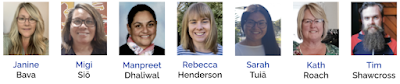
Janine Bava

Has created an inclusive education site with links to resources which will support learners with particular learning needs, or barriers, and a bank of resources to utilise to enable access to the curriculum.

Migi Siō

Supporting bilingual students who are reading more than two years behind their chronological age. Building vocabulary and word bank.

Manpreet Dhaliwal

Developing Critical Literacy Skills in Learners, through cultivating and facilitating Questioning. The site has information about Critical Literacy for both teachers and learners.


Rebecca Henderson and Sarah Tuiā

Matauranga Pāngarau. - A complete tool This site has Number Knowledge resources for Levels 1-4. (Currently Levels 2-4) The intent of this tool is for independent student use, but directed by the teacher. Please click on the photo below or the following link to check out our tool. 

Kath Roach

Kath has created a website that is meant to be a work in progress with new resources added constantly. She does not profess to be an expert of the Structured Literacy Approach but a teacher wanting to learn more. 


Tim Shawcross

Increasing literacy in a secondary music class context.

Device and Finance Procurement for 2022

The newer models include reinforced charge ports and more secure keys.
The price is great due to the increase in cost for all materials etc.

Looking ahead to 2022


We've been doing this for 6 years and counting now.
Increased sensemaking as ‘real-time’ data becomes available. Growing the team in Literacy support with Maths to follow

The Challenge/Provocation

Research Provocation by Dr Rebecca Jesson (WFRC)

Responding to the challenges:


So... What next?

  • Mote: voice notes & feedback - explore how this can be utilised for rewindable learning.
  • Push for DFI and Toolkits participants for 2022.
  • What opportunities for connection are there with schools such as St Francis os Assisi, in the Te Ara Tūhura cluster to best support our Structured Literacy Journey?
  • TAI v SMART Goal? - can we find a more effective "better" way?